Modernize and streamline data exchange
Ensure ongoing compliance and deliver a better member experience with our award-winning interoperability platform.
Identify risk-adjustable opportunities, maximize revenues, and minimize coding errors
Value-based programs take a variety of forms, but they all have one thing in common: their success depends on effective and efficient risk adjustment. Health plans need to maximize revenues, identify risk-adjustable opportunities, and minimize coding errors, all while remaining compliant with changing regulatory guidelines.
With the Risk Adjustment Coding Suite, your organization can achieve each of these objectives—and you can do it at scale with a single, unified solution. Our AI-powered, SaaS-based suite is designed to cover all areas of your risk adjustment operations, from retrospective and pre-submission coding to compliance, submissions, and even audit support.
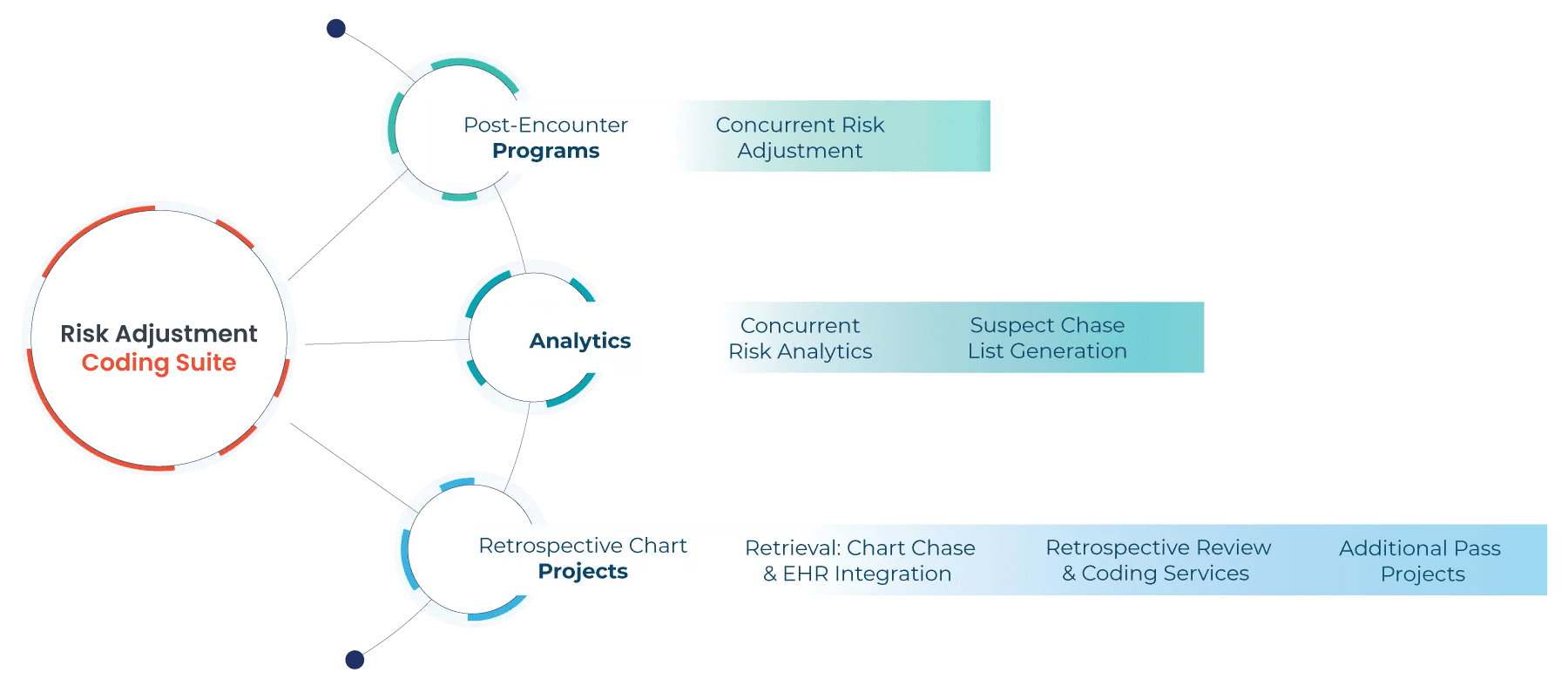
Ensure ongoing compliance and deliver a better member experience with our award-winning interoperability platform.



Concurrent Risk Adjustment
Retrospective Review
NLP Suspecting
Ensuring complete and accurate payments is the key to succeeding in value-based care. Edifecs’ Risk Adjustment Coding Suite helps make a big job more manageable.
What is the benefit of concurrent risk adjustment relative to retro reviews?
Retrospective review is a valuable part of ensuring care continuity and closing coding gaps. However, retrospective reviews occur months after care has been administered, and the resulting lag in payment adjustments and documentation accuracy can create challenges for payers and providers alike. In addition, only a handful of state Medicaid programs permit retrospective chart reviews and/or supplemental submissions, so without concurrent measures, it can be difficult to obtain an accurate picture of risk.
How can technology help with provider abrasion?
Provider abrasion is often the result of inefficient processes or excessive administrative requirements that complicate workflows and distract providers from their patients. The right technology should fit seamlessly into existing provider workflows, eliminate duplicative administrative work, and allow providers to focus on delivering the best care possible.
What is the timely claims payment rule?
The timely claims payment rule requires health plans to pay 90% of all clean claims received from practitioners within 30 days of receipt, 99% of clean claims within 90 days of receipt, and all other claims within 12 months of the date of receipt