Optimize your data exchange workflows
Automate business processes, modernize your technical infrastructure, and reduce costs with our industry-leading platform.
Optimize business processes and workflows
In today’s healthcare ecosystem, data is everything. But aging and disparate data systems lead to high demand, limited visibility, and errors that result in high costs and, more importantly, a lack of data mobility.
Our Smart Trading platform—named Best in KLAS for CMS Payer Interoperability for the past two years—offers unmatched quality and performance, optimizing workflows and making it easier for users to make sense of their data. Our constant solution innovation and managed-SaaS model allows you to focus on your administrative priorities while reducing IT infrastructure costs.
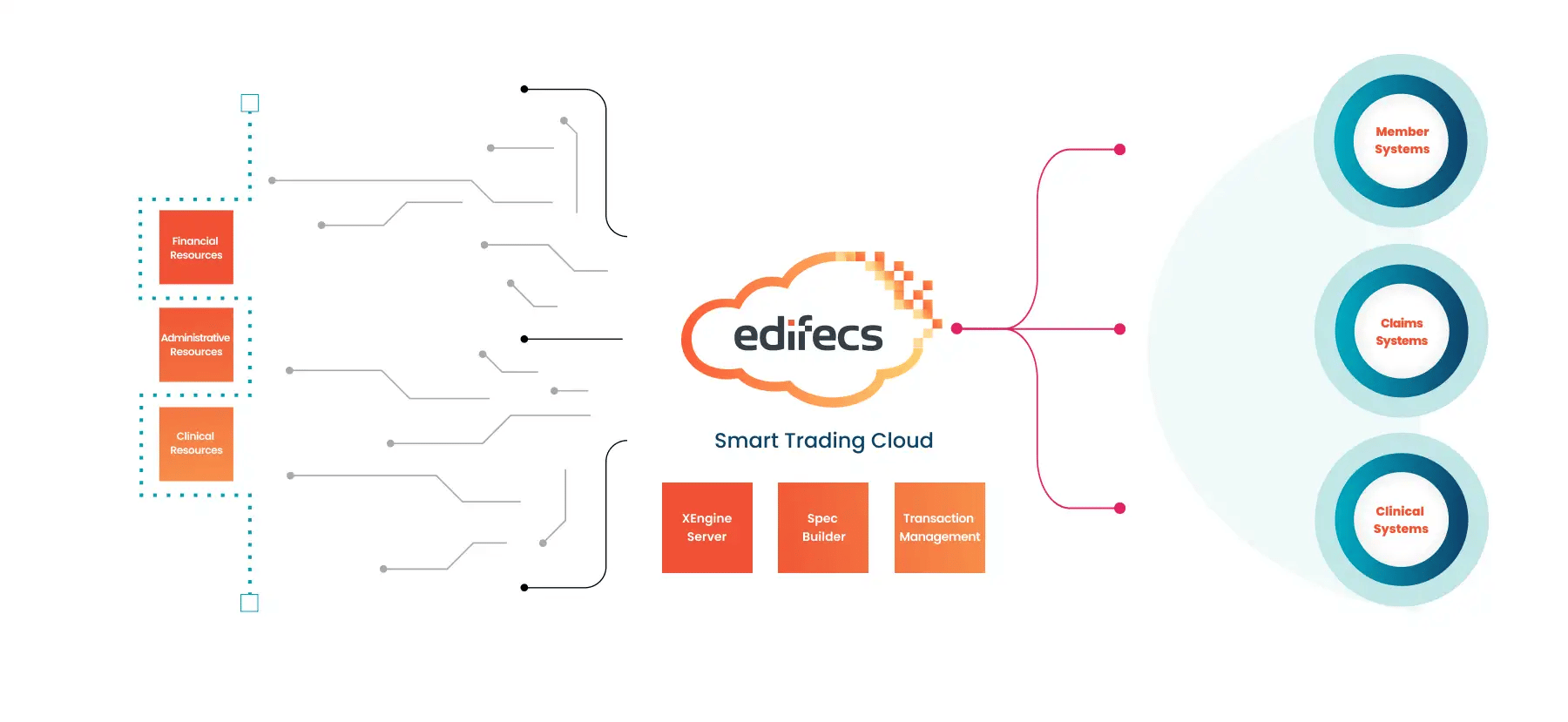
Automate business processes, modernize your technical infrastructure, and reduce costs with our industry-leading platform.



Bi-Directional Data Exchange
Electronic Transactions
Integration Engine
Transaction Specifications
Why is data exchange so important in healthcare?
According to a recent study by RBC Capital Markets, an estimated 36% of the world’s data volume will be generated by the healthcare industry by 2025.
The success of value-based care depends not just on the effective collection and use of healthcare data, but on ensuring that that data can be seamlessly exchanged across all healthcare stakeholders. Building a truly interoperable healthcare system simply isn’t possible without effective data exchange.
How does Smart Trading support compliance with regulatory guidelines?
For over 20 years, the ONC and CMS have made it a priority to facilitate the secure and free-flowing exchange of patient data, and their regulatory mandates reflect that goal. Technology solutions like Smart Trading help health plans comply with regulations.
How does automating data exchange reduce costs?
A recent study by Sage Growth Partners found that 43% of IT staff time is spent on manually extracting and harmonizing data. Reducing manual workloads by 50% for those processes alone could save healthcare organizations nearly $2 million over three years.
To truly reduce costs, healthcare organizations should look to implement a smart data fabric and embrace interoperability standards. The Sage study found that by doing so, healthcare organizations can save upwards of $42 million over three years.